Starting with a Big Question: A Place-Based Approach to Learning Design
Have you ever wondered why your neighborhood looks the way it does?
Why is the grocery store located where it is?
Why do some streets have sidewalks while others don’t?
Why does one part of town have parks while another feels like a concrete desert?
The answer lies in urban planning — the process that determines how places grow, connect, and function. But more importantly, planning reveals how people and place shape each other — through design, policy, and everyday experience.
How Place Informs My Instructional Design
This project reimagines traditional instructional design models like ADDIE, SAM, and Bloom’s Taxonomy through a place-based and empathy-centered lens. In the Analysis and Design phases, I don’t just identify learning objectives — I map spatial realities: how communities move, what barriers exist, and where inequities appear in the built environment. These insights ensure that content reflects real lives and real landscapes.
Using SAM’s iterative design cycles, learning experiences evolve through feedback from actual communities — not just test audiences. Each prototype becomes a field study in empathy, built around how learners interpret and inhabit their environments. This makes every iteration more rooted, relevant, and resonant.
Reimagining Bloom’s Taxonomy Through Place
Rather than treating Bloom’s Taxonomy as a linear hierarchy of skills, I approach it as a geography of understanding. Learners move across levels — from remembering (recognizing what’s around them) to analyzing (understanding why spaces function as they do) and creating (imagining new possibilities for their neighborhood). This spatial framing transforms learning from abstraction into agency.
Tools for Learning and Connection
To bridge planning and understanding, I design learning experiences that combine:
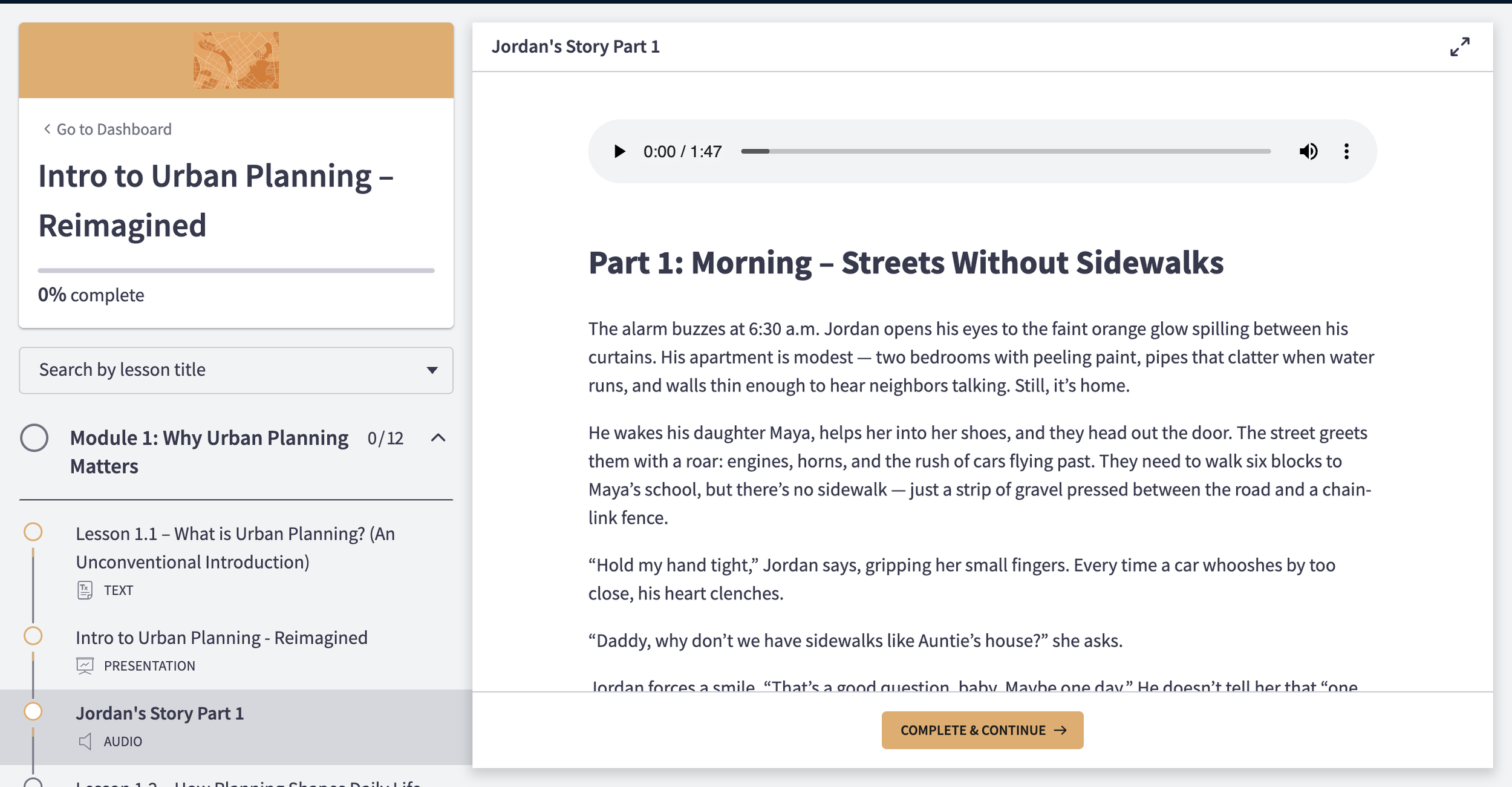
Storytelling and Voice Readings: to center lived experience and empathy.
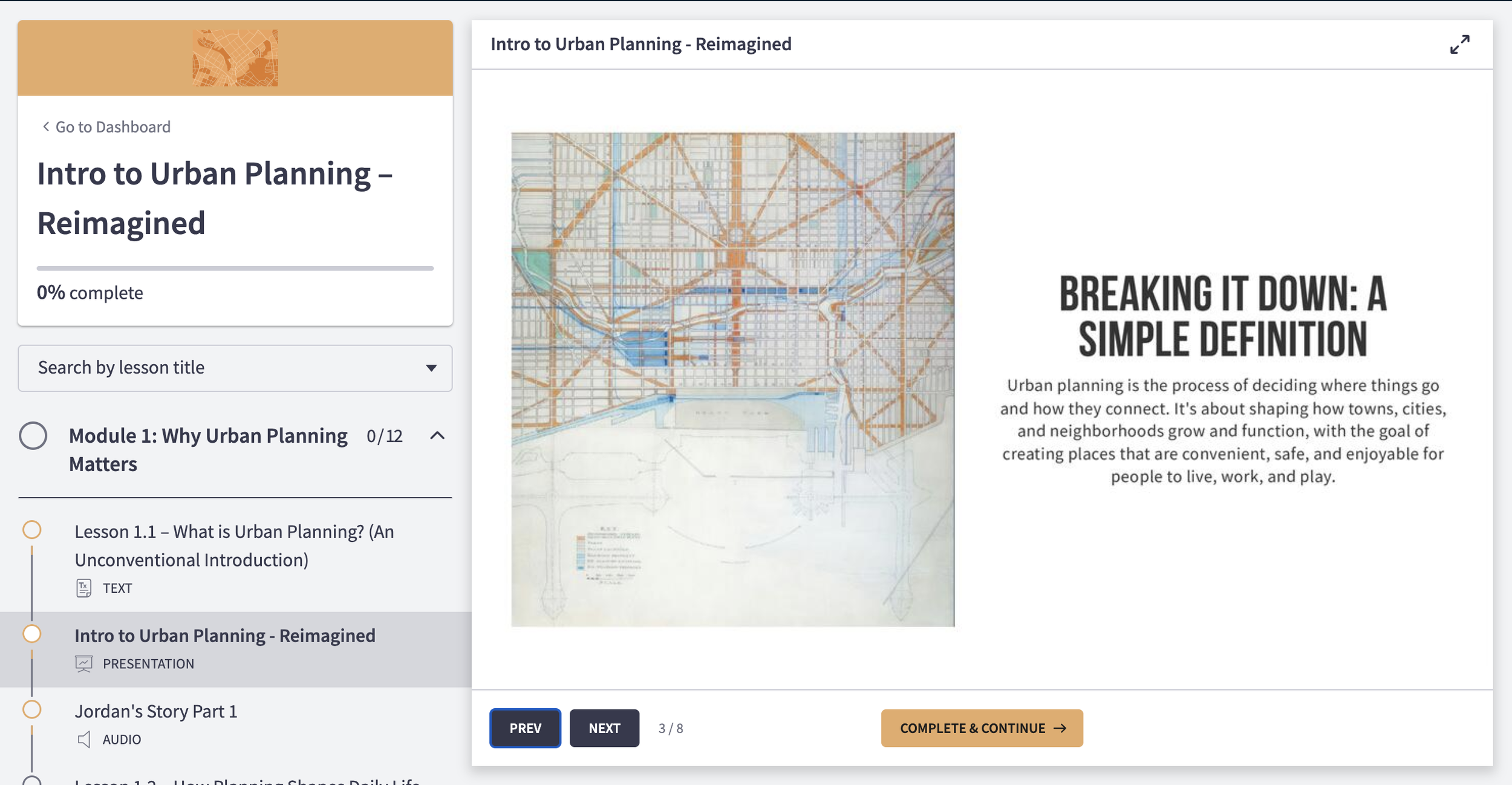
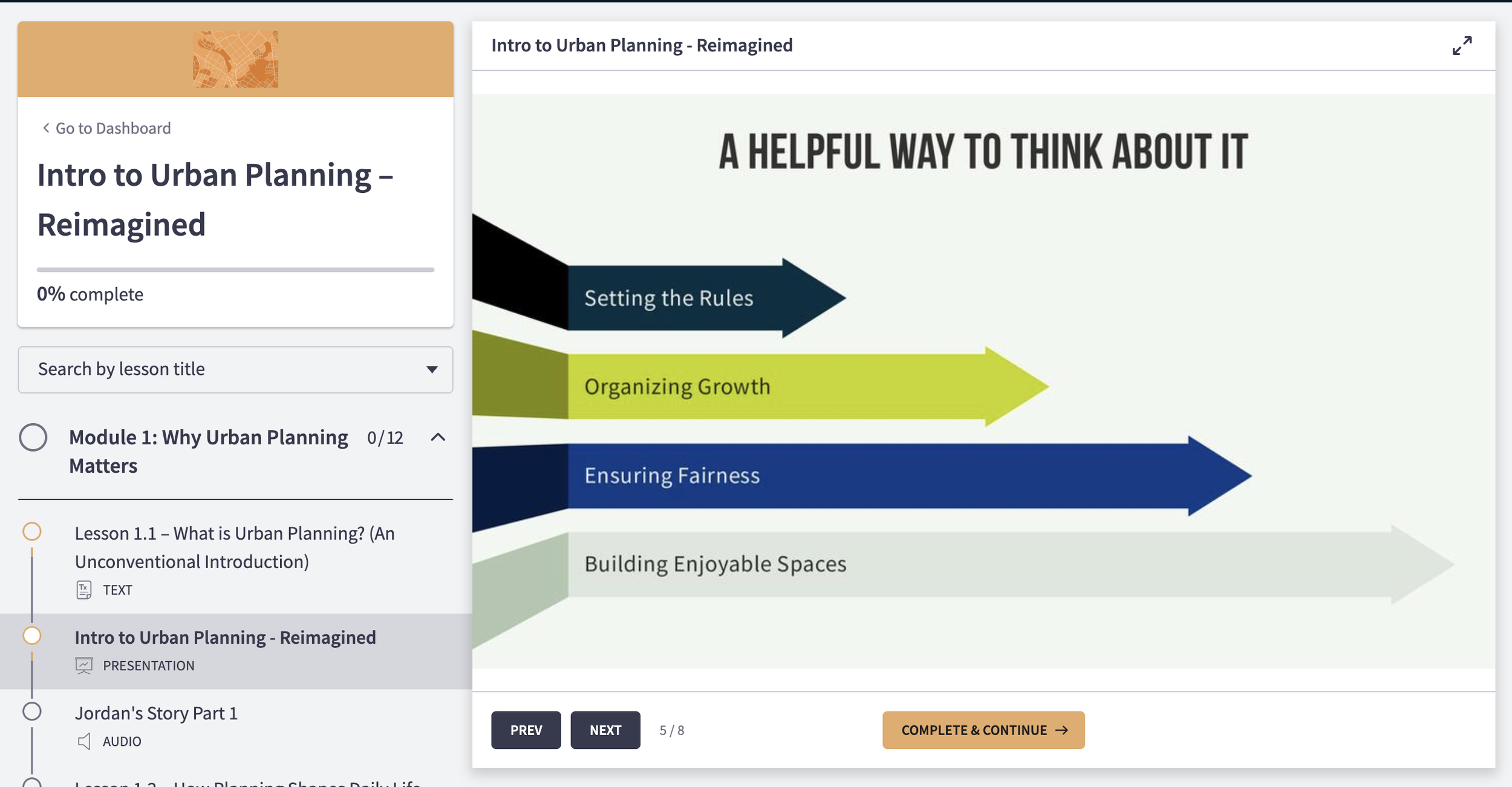
Visuals and Presentations: to make spatial patterns visible and relatable.
Videos and Case Studies: to connect design decisions with human consequences.
Interactive Discussions: to transform participants into co-creators of knowledge, not passive recipients.
The Goal: Building Capacity Through Empathy and Place
At its core, this work turns instructional design into an act of civic empowerment.
By blending place, perspective, and empathy, learners begin to see themselves not outside of systems, but within them. They recognize that every sidewalk, bus stop, or zoning decision carries a human story — and that they have the power to shape what fairness, access, and belonging look like in their communities, block by block.